Tuesday, May 27, 2008

Its not just a GIRLIE Problem

Although fewer men than women suffer from eating disorders, a new research indicates that the number of men with anorexia or bulimia is much higher than previously believed. Despite this, men, whose treatment needs are the same as those of women, do not seek help and, therefore, do not get adequate treatment. Eating disorders have been seen largely as an issue affecting women, and because of that, I believe men have been far less likely to identify themselves as affected by it or to actually seek out treatment. However it is estimated that approximately 10% of men suffer from eating disorder. Daniel Johns, is of the men who suffered from an eating disorder. One of the most influential performing artists from Australia Johns, has openly spoke about his battle with anorexia he went through during his teenage years. In fact he wrote and recorded the song “Ana’s Song” with his rock band Silverchair highlighting his battle with anorexia. Interestingly enough a woman was cast to play the role of the victim suffering from the eating disorder in the music video however she weighed more than Johns himself .In June of 2004 johns appeared on ABC TV's ' Enough Rope' with Andrew Denton to discuss his struggle with anorexia and depression. "I have a theory because I was being beaten up a lot by people outside of school, it was almost like if I could make myself sick enough they'd take sympathy on me." Johns said during the interview. This sense of trying to gain control in a specific situation reminds me of a section from the Chrisler article we discussed for class called “Out of Control and Eating Disorders” saying “In other words, anorexia can be seen as a desperate attempt by the powerless to gain some control and influence (p.142)”. Starving yourself or deliberately making yourself sick is indeed a desperate attempt to try to gain control over you life. However these attempts decreased and by 2002, Johns appeared to have underwent treatment and was on the road to recovery from his internal trauma. However, shortly after his recovery Johns was struck down by a severe and rare case of reactive arthritis. His joints became inflamed and locked up, with any movement being painful, so that he could no longer play guitar or do everyday things.

Often times Men who participate in low-weight oriented sports such as jockeys, wrestlers and runners are at an increased risk of developing an eating disorder such as anorexia or bulimia. The pressure to succeed, to be the best, to be competitive and to win at all costs, combined with any non-athletic pressures in their lives such as relationship issues, family problems, or abuse, can help to contribute the onset of their disordered eating. Psychiatrist Arnold Andersen, director of the eating disorders program at the University of Iowa and a widely recognized expert on male eating problems, said he has treated teenagers who developed bulimia or anorexia after failing to make a sports team where weight is paramount, such as wrestling.

On the flip side of eating disorders comes binge eating or compulsive overeating. It is characterized by uncontrollable eating followed by feelings of guilt and shame. It is different from bulimia in that it does not involve any purging. While it inevitably results in weight gain, it is also not to be confused with obesity (but can cause it). Not everyone who is overweight has an eating disorder. In today's society, compulsive overeating is not yet taken seriously enough. Instead of being treated for the serious problem they have, they are instead directed to diet centers and health spas. The comedian Chris Farley reportedly suffered from compulsive overeating. He died December 18, 1997, at age 33. The cause of death was due to a drug overdose. Farley's death seems to be a consequence of his life-long struggle with drug and alcohol abuse, as well as compulsive overeating. Like anorexia and bulimia, compulsive overeating is a serious problem and can result in death. With the proper treatment, which should include therapy, medical and nutritional counseling, it can be overcome.

Work Addiction and the Effects it has on the Family

*Watch Clip before reading*


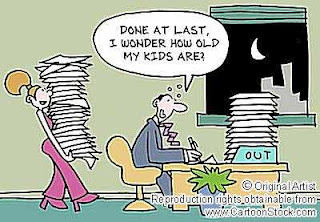
No other addiction is so willingly adopted, rewarded and praised by society as the addiction to work. It can prove quite a complicated issue, as the individual may have to incorporate looking after their family, and trying to meet all their needs. Workaholism is an addictive pattern like any other addiction. Some people get an adrenaline high from juggling four or five commitments, taking care of others or simply being busy or being the first person in the office in the morning or being the last to leave in the evening. Maybe they think that this is what is expects of them, sadly this is sometimes true. Common symptoms among workaholics may be forgetfulness or inattention, with awareness impaired by stress and fatigue. So what is behind this desire to push ourselves to the very limit, sometimes risking all we have - health, family, friends? The roots are often in our, unfulfilled or unmet needs, the feeling within us is that we have to achieve a certain standard, or amount of work before we can become accepted as a person (especially as women). The belief of a workaholic is that we are of little worth on our own. Taking the responsibility ourselves, not leaving it with others, and finding out what is pushing us gives us the tools to change. Often times people may have feelings of low self esteem, or of inadequacy, believing nothing they ever do or be good enough, the result is that they keep striving trying to do more and better. Work may also provide some with temporary relief from pain from a broken relationship, or from boredom or guilt or many other feelings they may want to avoid. It’s obvious that work addiction may be caused by many factors depending on the person, now in this blog I will show what types of effects this type of addiction can have on the family.

Society puts pressure on people and often measures women by what we do, rather than by who/how we are and what we believe. Our job becomes more important than the actual characteristics of a person. Clearly some occupations are considered in a different class than others. Sadly all this can lead women to believe that the predetermining factor to our sense of self worth is measured by what we do. This most of the time lead women to become detached from who they really are and from their families. A great example of this is shown in the Tyler Perry Film “Why Did I Get Married"?. Diane, a hardworking lawyer and her husband are having marital problems in which most is centered around Diane's heavy work load. Diane’s husband Terry, a well accomplished pediatrician is constantly feuding with his wife about how little time she spends with him and their child. Another issue is the fact that Terry wants more kids and Diane absolutely disagrees with having more children due to the fact that she feels it would put a strain on her career. Diane went so far as to having her tubes tied to secure the possibility of not having kids behind her husbands back. After Terry finds this out their married makes a turn for the worst. The scene that I have selected for this blog opens up with Diane rushing home after being reminded by a friend that it is her husband birthday. She comes home to another women and her husband having cake and her daughter in bed. The couple begins to argue and the scene ends with him announcing that he is moving out.
Just from this short clip from the movie we can see how over working can effect the family. 1) less time is being spent in the home for bonding, 2) space is opened up for outsiders to come in and possibly take the spot of the missing family member (that would be the wife and mother in this example) and 3) it can ultimately end in the family splitting up. Besides the effects work addiction can have on the family workaholics also suffer mentally and physically. Workaholics often suffer from something called ‘Burnout’. This is when the body can no longer take anymore strain and becomes weak. Also workaholism tends to bring with it headaches, sleep disorders, gastric problems and chronic fatigue.
The work addiction, like any of the other addictions is a difficult cycle to break. Like all the other addictions, however, it is possible. The first and most difficult step is acknowledging that you are responsible and the problem is within you, which must be resolved. This is a very difficult step and as it states in Fassel & Schaef’s article “A Feminist Perspective on Work Addiction” that “denial is subtle in that few workaholics will vehemently deny that they overwork. Instead we compare (p. 207)”. Unfortunately we as women live in a society that puts very little value on us and judges us on what we can bring to the table and although it is not right many women believe in this theory and will do everything in their will to achomplish as much as they can so they can be seen as a valuable person causing them to over work and ultimate suffer from the effects of that just as we seen with the example of Diane.

Monday, May 26, 2008

Sex as a Replacement Addiction or Numbing Agent

The term “sexual addiction” can be defined in so many different ways and are given many labels such as Nymphomania, hypersexuality, erotomania, perversion, and sexual obsession. People struggling with sexual addiction find themselves behaving in uncontrollable and compulsive ways, putting themselves and those around them in considerable danger. Sexual addiction does not get the same attention as drug and alcohol addiction, but it is still very real and very dangerous. The National Council on Sexual Addiction and Compulsivity has defined sexual addiction as "engaging in persistent and escalating patterns of sexual behavior acted out despite increasing negative consequences to self and others." Sexual addiction is best described as a progressive intimacy disorder characterized by compulsive sexual thoughts and acts. Like all addictions, its negative impact on the addict and on family member’s increases as the disorder progresses. Over time, the addict usually has to intensify the addictive behavior to achieve the same results. Sex addiction can involve a wide variety of practices, and may co-occur (dual diagnosis) with drug and alcohol addiction or other substances and psychological disorders. A large number of sex addicts say their unhealthy use of sex was a progressive process. It may have started with an addiction to masturbation, pornography (either printed or electronic), a relationship, multiple relationships, or a series of one-night-stands, but over the years progressed to increasingly dangerous behaviors.


As stated earlier sex addiction may be accompanied with another addiction or disorder and in this blog I will explain how one addiction could possibly replace the other. As we know Lindsy Lohan, the famous child actor turned superstar party girl has been in and out of rehab for her addiction to coke. In an exclusive News of the World interview with Riley Giles the Extreme sports professional tells all about how “TROUBLED Hollywood star Lindsay Lohan has traded her dangerous DRUGS habit for a manic addiction to SEX”. He began the interview saying "Lindsay's definitely a nymphomaniac. She's wild in bed. We'd have sex a couple of times in the day and then go to it through the night. We once did it four times in a row straight. That was crazy. Lindsay was insatiable. She'd demand sex again and again. We'd go at it for hours. She'd have worn out most guys." The two meet in rehab which both of them had attended and instantly began a sexual relationship barely knowing each other. Riley revealed how Lindsay used orgasm after orgasm as a potent substitute for the huge chemical hits she was used to while partying. He explained: "When you orgasm, your endorphins shoot up and it becomes a massive natural high. If you have an addictive personality like Lindsay you need that to replace the highs you got from taking drugs all the time. Sex became a key part of her recovery. Riley revealed their relationship changed when Mean Girls star Lindsay got back to Los Angeles to pick up her career. And he confessed he is terrified she might return to her bad old ways saying "I worry because it must be very difficult to keep up your recovery," he said. "I couldn't do it. Lindsay has a very addictive personality.”


Just like Lindsay many people addicted to a drug tries to replace it with another substance not thought of as so damaging during treatment. I’ve seen many times recovering crack heads or heroin addicts turn to alcohol. In some other cases alcohol or a drug of some sort is needed in the system to have sex. In Caroline Knapp’s story “Sex,” from Drinking: A Love Story the young lady Meg describes how alcohol actually helped her to numb the fear she experienced with sex by saying “Alcohol can numb fear, and allow you to fake it, and take you places you literally don’t want to go: strange beds. But it can also give you access to romance, a bridge to the positive sides of sexuality. Alcohol felt like the cement in female sexuality, at least it did to me: over the years the two would become so deeply linked that for the longest time I simply couldn’t imagine one without the other. A first kiss without drinks? Forget it. Sex without liquor? No way (p.86)”. This feeling of not being able to be sexual without alcohol being present allows me to think that she was ashamed of her body or herself. She believed that the drinking completed her saying “Drinking was as integral to my sense of sexuality as a body part: no more, no less. And sometimes that form of integration was effective, amazingly so (p.86)”.

Here we saw how sex addiction could be used to replace another addiction as well as an numbing agent. Overcoming sexual addiction starts with recognizing that you are out of control sexually. Getting to that point requires taking a hard look at yourself and the problems emotional, physical, financial, or legal caused by your sexual behavior. The second and most difficult issue involves facing the guilt, shame and depression associated with the addiction. It takes trust and time with a competent therapist to work through these emotions. Besides the steps taken by the addict trying to recover Shaef suggest as a culture things that would need to change. As we all know advertisements promotes sex in every way they possibly could and although if sex ads decreased it would have a tremendous economic impact but would also help in the treatment and recovery process of sex addicts. Overall, if a person is using sex as a replacement addiction or as an anesthetic treatment is available but as many other addictions it will take others as well as addict to fully recover.

Sunday, May 25, 2008

Ne-Yo's Sex Addiction


Want to but I can't help it

I love the way it feels

It's got me stuck between my fantasy and what is real

I need it when I want itI want it when I don't

Tell myself I'll stop everyday, knowing that I won't


I've got a problem and I (don't know what to do about it)

Even if I did I don't know if i would quit

But I doubt it

I'm taken by the thought of it


And I know this much is true

Baby, you have become my addiction

I'm so strung out on you

I can barely move...but I like itAnd it's all because of you (all because of you)


So, and it's all because of you (all because of you)

And it's all because of you (all because of you)

So, and it's all because...Never get enough

She's the sweetest drug


Think of it every second

I can't get nothing done
Only concern is the next time, I'm gon' get me some

Know I should stay away from'cause it's no good for me

I try and try but my obsession, won't let me leave


I've got a problem and I (don't know what to do about it)

Even if I did I don't know if i would quit

But I doubt it

I'm taken by the thought of it


And I know this much is true

Baby, you have become my addiction

I'm so strung out on you

I can barely move...but I like it


And it's all because of you (all because of you)

So, and it's all because of you (all because of you)

And it's all because of you (all because of you)

So, and it's all because...Never get enough

She's the sweetest drug


Ain't no doubt
So strung out

Ain't no doubt

So strung out


Over you, over you, over you

Because of you

And it's all because of you

Never get enough

She's the sweetest drug


And I know this much is true

Baby, you have become my addiction

I'm so strung out on you

I can barely move...but it I like it


And it's all because of you (all because of you)
So, and it's all because of you (all because of you)

And it's all because of you (all because of you)

So, and it's all because...Never get enough

She's the sweetest drug


She's the sweetest drug sweetest drug

In this blog I’ve decided to look at sex addiction through the lens of popular music and music artists. Many of you know or have heard of the pop star Ne-Yo and may have even heard of his alleged sex addiction. I will be looking at his self written songs and a few interviews to expose and critique this form of addiction. I began my discussion of sex addiction with the lyrics to one of his popular songs called “Because of You”. In the very first stanza of the song it is clear, although not specifically said that he is talking about an addiction of some sort. It doesn’t become clear that he is speaking of sex until he says “she’s the sweetest drug”. Following up to that part one might speculate that he’s talking about drug or perhaps alcohol addiction which is interesting that he uses that same language as one would use to describe a chemical dependency. He specifically states in the lyrics that “you have become my addiction” and that he’s strung out fully admitting to his obsession to the woman and how she feels ( the language used implies he’s talking about how she feels sexually). After watching the music video it was even clearer that that addiction he was speaking of was to sex. Different girls appears in a few scenes in compromising sexual positions, often in the bed half naked. In Wilson Shaef’s article “Sexual Addiction” he introduces Patrick Carnes levels of sex addiction and then later on critiques it saying “I believe Carnes levels of exual addiction are good. I would probably expand the levels and add others (p.32)”. Indeed Shaef does just this, expanding on the pre-existing levels and then adding one. I believe both Shaef and Carnes would agree to categorize Ne-Yo in the second level which includes “passive sexual addiction, are obsessive sexual fantasizing, passive pornography (voyeuristic, private), and voyeurism (p.33)” which is all evident in the lyrics and video to his song.

In an interview with Vibe Magazine back in 2006 Ne-Yo said that his addiction to sex has turned him into someone who resembles "Sammy Davis and Bugs Bunny with some porn mixed in," he also told the interviewer that his uncontrollable horniness also resulted in him making the grade with most (if not all) of the girls in his junior-year class. "I became a complete whore," Ne-Yo confesses, "I might possibly have had sex with every girl in my 11th grade class … it went from like, nothing to like, three and four a day." This somewhat cocky attitude and admitting to his addiction is not often seen with this type of addiction simply because it is not as accepted in our society as a “traditional” addiction (i.e. drug abuse). In Shaef’s article it goes more into depth on reasons why people aren’t willing to admit to having a sexual addiction by saying “Sexual addiction, is a hidden addiction; I have found more willingness to confront almost any other addiction. Sexual addiction carries a particularly large component of shame and denial with it. Paradoxically, it is also one of the addictions that is most intergraded into our society as “normal (p. 11) This explanation can possibly be why a year later Ne-Yo came out refuting the claims of his addiction in interviews and recording the declamatory song entitled "Addicted."


Young, energetic, famous but don't really sweat it

Rich enough, fairly hot - so basically sex is not:

Difficult to get

That ain't my fault, naw naw

Listen


And just cuz I might take advantage once or twice

People tell me I'm not right, thinking that sex was my life

But that just ain't me

So let me clear it for those who have obviously misread the code


Listen to me now

NO I AM NOTI'm not

ADDICTED TO SEX
But girl I guarantee that if you lay with me

You just might be


NO I AM NOT

I'm not ADDICTED TO SEX

But girl I guarantee that if you lay with me

You just might be yeah


I wanna 'pologize for bein just a little freaky

I can't help it, it's just ?

But a problem it is notI'm just fine ya'll

Don't worry bout me


Listen

And I wanna 'pologize

For bein blessed with the ability to satisfy accurately

And quickly find the spot

It's a gift and a curse

Don't mess around - find my numberIn your girlfriend's purse


NO I AM NOT

I'm not ADDICTED TO SEX

But girl I guarantee that if you lay with meYou just might be

NO I AM NOT

I'm not ADDICTED TO SEX

But girl I guarantee that if you lay with meYou just might be yeah


I never been shy bout my self and sexuality

Never been taboo (never been taboo but if I)

Have to live without

I know its something I could do

But I just really don't want to


Now in this song we see a few contradictions relating to his first song “Because of You”. He says many times that he is NOT ADDICTED TO SEX , and that if he had to live without it he could, when in fact in the first song he says “Tell myself I'll stop everyday, knowing that I won't” and “Even if I did I don't know if i would quit”. Why did Ne-Yo decide to change up and now deny his addiction? My guess would be the component of shame talked about in the article associated with sex addiction. After all of the talk about him being strung out and openly admitting to his addiction now was turned upside down. To sum up the critique and to cut Ne-Yo some slack “like all other addicts, sexual addicts become progressively dishonest, self-centered, isolated, fearful, confused, devoid of feelings, dualistic, controlling, perfectionist, blinded to their disease (denial), insane, blaming (projection), and dysfunctional. In short, their lives become progressively unmanageable (p.11).

Friday, May 23, 2008

THIN

In this weeks blog I will be talking about the film we watched in class called THIN. This film was in deed disturbing but necessary to show to create a conversation about eating disorders and their treatment. I have very mixed feelings about treatment for eating disorders and if they are really effective. The movie featured a few girls and each of their testimonies was similar but different in a sense. One of the girls, actually the youngest out of the bunch, fifteen year old Brittany was so obsessed with being thin she’d risk her life to meet that goal. I can remember at the end of the film when she was being discharged because her insurance ran out the other women in the center were trying to give her positive advice and Brittany just wasn’t getting it nor trying to listen I remember her saying something to the affect “I don’t want people to worry about me if I die” and that struck a cord for me because I just don’t understand nor see the point of trying to achieve a certain weight even if its going to take your life, how are you supposed to enjoy you reaching your goal if you’re dead? Although I don’t understand how these girls feel and what they go through, there are other women out there who can relate to Brittany. A quote taken from one of the readings The Body Politic relates specifically to Brittany and her situation “I felt powerful as an anorexic. Controlling my body yielded an illusion of control over my life; I received incessant praise for my figure despite my sickly mien, and my frailty manipulated family and friends into protecting me from conflict. (180)” I can partially understand Brittany’s need to want to loose weight because as she often said she was heavy as a young child and was picked on and didn’t want to go back to the feeling of being teased by other girls.
Shelly, another young woman in the center had a severe eating disorder and had actually been to many treatment facilities and was not trusted by the staff. She was often accused of purging and on one occasion hiding food. The most interesting thing I noticed about Shelly was that she was so focused on being independent and having to take on certain responsibilities and be on her own. I believe she felt comfort within the center because this was her way of escaping reality which would make it easy to understand how she so quickly bonded with a group of girls.
Another topic to look at to determine how effective these treatment centers are is to look at the problem of insurance coverage. Most of the girls were discharged after their insurance refused to pay anymore. The film showed that while the women were in the center treatment was very effective but as soon as they were released most of them returned to their old behaviors and were back where they started before treatment and some worse off. I don’t understand the whole treatment process and why have these types of programs if they are only temporary while closely being monitored. I don’t mean to sound so critical but this seems like a big gimmick for those in that profession because they rotate girls in and of the centers collecting their money but not looking out for the full, total interest of the patient. Speaking of interest of the patient, I really didn’t agree with the discharge of Polly. Although the staff didn’t trust her and she had done thing against their policy I feel they should have taken a different approach such as putting her in seclusion or penalizing her in some way. I had to question what the true motives were of the center and was it truly centered around the FULL treatment the patient.
By no means am I implying that treatment centers are bad I actually believe that they are helpful when the total focus is on the patient’s betterment.

Monday, May 19, 2008

Guest Speaker

Monday’s class was great, the topic discussed was heavy and I thought it was admirable for Jill to share her story/testimony with the class. Although I don’t have an eating disorder I could relate to many things she talked about throughout the time she was here. One specific thing that stuck was when she talked about her boyfriend and how she thought he broke up with her because she was fat. I know for myself have judged myself on different occasions and thought that people thought I was to fat and that’s why I didn’t succeed, or wasn’t chose. I can even remember think to myself “after I loose weight, they would pay attention to me”. I can understand how those thoughts can ruminate your mind and have a psychological affect on you. One of the questions posed in the paper wrote by Jill was ‘why women starve themselves, binge and purge, or eat compulsively’ and it explained that it point towards women’s self-inflicted scrutiny of their bodies and their desire to attain thinner physiques and after hearing Jill speak it was more clear and understandable where this self-inflicted scrutiny comes from (boyfriends, friends, family). Another thing that can contribute to self-inflicted scrutiny is pressure from outside sources (i.e. media). In Jill situation I think the fact that she was a competitive dancer put another pressure on her to stay thin. Throughout her paper many forms of treatment were discussed and suggested one that was interesting to me was that developing self-love is essential for this process of treating eating disorders and I personally agree with this. In many treatment processes the main goal is to achieve and maintain normal body weight, which is good, and also to educate the person suffering from the disorder which is also great. The weight of the women can decrease and simply educating women won’t solve the problem but if the person develops a sense of self love this can impact the self-inflicted scrutiny that many women with eating disorders inflict on themselves. Another thing in the paper talked about in the treatment process was the ‘spirit’ connection which I also agree with but could be easily disputable among those who don’t necessarily believe in that.
This quote taken form Jill’s paper explains how she was comfortable with sharing her story with us and also another form of her treatment.
If women are encouraged to express their experiences of pain, these shared experiences will, as AnzaldĂșa writes, “articulate unnamed, unvoiced, and repressed experiences and realities” (562). Bringing these realities to the surface allows women to live without having to hide from the parts of themselves that hurt. This process also allows women to connect with each other without hiding their pain.
The experience Jill went through was traumatic and often times we talk about how some women/people have prior traumatic events happen to them that lead to their addiction or disorder. I don’t necessarily remember her mentioning a traumatic event that lead to her disorder besides the issue of her being dumped by her boyfriend but I’m happy to se that she has overcome her disorder and is able to live a normal life and openly share her experience with people.

Saturday, May 17, 2008

Cosmetic Surgery Addiction

Many of us, both women and men have something on our body that we are dissatisfied with and would like to change, and many of us has also thought of plastic surgery at one point of time (I’d be lying if I said I hadn’t). This is completely normal but when someone begins to obsess over theses thoughts is when it becomes a problem. Cosmetic surgery addiction commonly seen among celebrities and can be caused by many things and can lead to a somatoform disorder called Body Dysmorphic Disorder. MayoClinc.com has published an article on the causes, signs, symptoms, and treatment for BDD that I will be critically analyzing.

Body Dysmorphic Disorder is said to be an excessive preoccupation with a real or imagined defect in your physical appearance. People with BDD often have problems controlling negative thoughts about their appearance, even when reassurance from others that they look fine and that the minor or perceived flaws aren't noticeable or excessive, this characteristic is commonly seen in people with eating disorders which shouldn’t be a surprise that BDD can cause or be present with an eating disorder such as anorexia nervosa or bulimia nervosa, especially if it involves a weight-related part of the body, such as the waist, hips or thighs that is wanted to be changed. Other disorders associated with BDD are Generalized anxiety disorder. This condition involves excessive worrying that disrupts your daily life, often causing exaggerated or unrealistic anxiety about life circumstances, such as a perceived flaw or defect in appearance. A history of or genetic predisposition to GAD may make a person more susceptible to BDD. Also OCD is common in BDD people in which a person uncontrollably practices ritual behaviors that may literally take over his or her life. A chemical imbalance in the brain such as an insufficient level of serotonin, one of the brain's chemical messengers involved in mood and pain, may contribute to BDD which could possibly be hereditary. Someone with BDD would exhibit such behaviors as frequently comparing appearance with others, repeatedly checking the appearance of the specific body part in mirrors or other reflective surfaces, refusing to have pictures taken, wearing excessive clothing, makeup and hats to camouflage the perceived flaw, seeking reassurance about the perceived defect or trying to convince others that it's abnormal or excessive and avoiding social situations in which the perceived flaw might be noticed. Depending on the behavior a person is carrying out the disorder associated with it would be quite obvious.
To discuss plastic surgery and not mention what role the media plays would be an injustice to many who suffer from BDD. In Jean Kilborne’s “Still Killing Us Softly: Advertising and the Obsession with Thinness” talks about the influence of the advertising and how eating disorder has recently increase in recent years. Taken directly from the article “The sixth most frequently prescribed drug in America is a diuretic. Many ads for laxatives that used to feature old people now use slim and attractive young women (398)” this directly suggest to young women if you want to loose weight and look like the women in the ad use laxatives which helps in the explanation to why some people develop eating disorders and other disorders like BDD.
As I stated earlier celebrities or those in the lime light are usually the victims suffering from BDD and I’m pretty sure we can name a few without thinking that hard. Michael Jackson would defiantly be one at the top of the list. From the article on MayoClinc.com “People from families of higher socioeconomic status or strict cultural standards may experience body dysmorphic disorder more often. Someone who feels that he or she must live up to unobtainable or unrealistically high expectations for personal appearance and success may be more prone to BDD.” It is understandable how the King of Pop would feel the pressure to live up to these high expectations of personal appearance. In the You Tube video of Morphing Michael Jackson you can observe how Michael’s look (his face and skin color in particular) has drastically changed over the years.

A combination of medications and therapy is often used to help people overcome BDD. A specific type of antidepressant called selective serotonin reuptake inhibitors may help lessen or alleviate the signs and symptoms of BDD. Cognitive behavioral therapy is often recommended the process of treatment. This type of therapy identifies unhealthy, negative beliefs and behaviors and replaces them with healthy, positive ones.
With this example we see how addiction can lead to severe disorders and can influence your mind and body. However there is treatment which is effective and can help break this addiction.